When the Rains Decide: How Hyderabad's Monsoon Season Has Become the Preferred Backdrop for America's Most Consequential Business Pivots

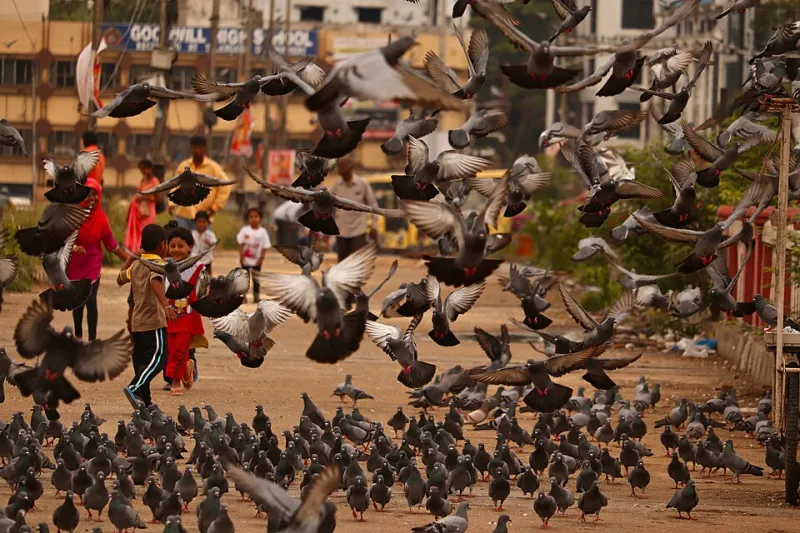
Photo: Alosh Bennett from Hyderabad, India, CC BY 2.0, via Wikimedia Commons
There is a particular kind of clarity that arrives uninvited. Not the clarity manufactured in a Napa Valley strategy offsite, nor the forced stillness of a Scottsdale wellness retreat. The clarity that a growing number of America's most influential investors describe — quietly, often reluctantly — is the kind that arrives with the first hard rains over the Deccan Plateau.
Hyderabad's monsoon season, which unfolds between June and September each year, has become something of an open secret among a rarefied tier of American capital allocators. These are not tourists chasing novelty. These are principals — managing partners, founders who have taken companies public, family office directors overseeing generational wealth — who have deliberately restructured their annual calendars to place the most consequential decisions of their professional lives inside the atmospheric drama of a South Indian monsoon.
The question worth asking is why.
The Psychology of Natural Disruption
American business culture has long fetishized the controlled environment. Glass-walled conference rooms. Curated agendas. Predictable catering. The implicit assumption is that clarity emerges from order. What a small but influential group of investors has discovered in Hyderabad challenges that assumption at its foundation.
The monsoon does not negotiate. When the rains arrive over the city — sudden, total, transforming the streets and filling the old tanks that have held water for centuries — there is an involuntary reorientation that occurs in the human mind. Psychologists who study environmental cognition refer to this as "attentional restoration": the capacity of dramatic natural environments to interrupt habitual thought patterns and create space for genuinely novel reasoning.
For investors who have spent decades inside the same cognitive loops — the same frameworks, the same peer networks, the same Silicon Valley or Manhattan reference points — this interruption is not merely pleasant. It is strategically valuable.
One senior partner at a prominent San Francisco-based venture firm, who has made the journey to Hyderabad for three consecutive monsoon seasons, described it this way: "There is something about watching a city of ten million people simply stop and accept the rain that recalibrates your relationship with control. You walk into a negotiation afterward and you're not performing certainty anymore. You're actually thinking."
The City's Own Relationship with Renewal
Hyderabad's culture has always understood the monsoon as a threshold — a dividing line between what was and what will be. The agricultural communities that surrounded the city for centuries organized their entire economic calendar around the rains. The Nizam courts of the eighteenth and nineteenth centuries reportedly scheduled significant administrative decisions to follow the first monsoon, treating the season as a natural audit of priorities.
This cultural memory is not incidental. It is embedded in the rhythms of the city itself. The lakes and reservoirs that define Hyderabad's landscape — Hussain Sagar, the Osman Sagar, the ancient Mir Alam Tank — fill and breathe with the rains in ways that make the city's relationship with water feel almost ceremonial. For visitors arriving from the relentless forward motion of American professional life, this seasonal punctuation carries an almost disorienting weight.
It is precisely this disorientation that concierge services operating at the highest levels of Hyderabad's hospitality sector have learned to curate. The experience of the monsoon is not left to chance for clients operating at this tier. The timing of morning meetings is structured around the heaviest rainfall windows. Private terraces in heritage properties are configured so that the sound and sight of the rain becomes a participant in the conversation rather than a background distraction. Evening sessions are often scheduled at the edges of the city, where the plateau opens and the storm systems can be observed at scale.
Negotiation in the Rain
The practical mechanics of monsoon-timed dealmaking in Hyderabad follow a logic that experienced facilitators in the city have refined over many seasons.
Mornings, when the air carries the particular clarity that follows a night of heavy rain, are reserved for analytical work — the forensic review of term sheets, the stress-testing of assumptions, the kind of left-brain processing that benefits from crisp atmospheric conditions. Afternoons, when the rains typically return and the city slows, are used differently: for the more discursive, relationship-oriented conversations that determine whether a partnership has the cultural and interpersonal architecture to survive the inevitable pressures ahead.
This rhythm mirrors something that experienced negotiators have long understood but rarely articulate: that the most durable agreements are not reached in a single session of focused pressure, but across alternating cycles of intensity and release. The monsoon, it turns out, is an exceptionally effective external enforcer of that rhythm.
American investors who have structured transactions during Hyderabad's rainy season frequently report a specific phenomenon: the absence of the artificial urgency that characterizes most high-stakes negotiations in domestic settings. When the rain makes movement through the city impractical, the pressure to perform speed — to demonstrate decisiveness as a proxy for competence — dissipates. What remains is the actual quality of the thinking.
What the City Offers That No Conference Room Can
Hyderabad's monsoon season is not comfortable in the conventional sense. The humidity is significant. The logistics of movement require patience. The city operates on its own schedule, not the visitor's. For the investor accustomed to environments engineered entirely around their preferences, this requires a form of adaptation that is, in itself, clarifying.
The most sophisticated clients engaging Hyderabad VIP Service during the monsoon season are not seeking comfort. They are seeking consequence. They have identified, through experience, that the decisions made in environments that demand genuine presence — rather than environments that simply reward the performance of presence — tend to be the decisions that hold.
The rains come whether you are ready or not. Some of the most successful investors in America have decided that is precisely the point.