Patience as Capital: What Wall Street Can Learn from Hyderabad's Five Centuries of Pearl Mastery

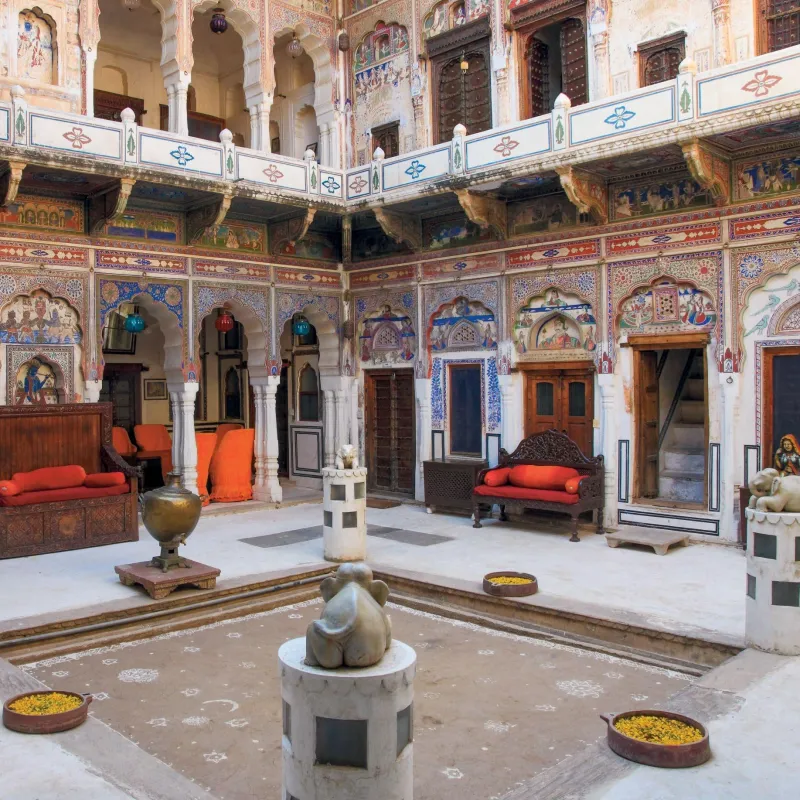
Photo: Theanjalivarma, CC BY-SA 4.0, via Wikimedia Commons
There is a particular kind of knowledge that cannot be downloaded, summarized in a newsletter, or absorbed during a conference keynote. It accumulates slowly, passed from merchant to apprentice across generations, embedded in the tactile weight of a pearl held between two fingers. Hyderabad has been generating this knowledge for five hundred years. And for a select group of American investors and entrepreneurs, accessing it has become one of the most consequential decisions of their professional lives.
The city's relationship with pearls is not merely historical decoration. It is, for those who study it carefully, an operating philosophy—one that challenges nearly every assumption underpinning modern American finance.
A Market Built on Discernment, Not Speed
At the height of the Nizams' rule, Hyderabad commanded a pearl trade that stretched from the Persian Gulf to the courts of European royalty. The merchants who thrived in this ecosystem did not succeed through velocity. They succeeded through judgment—the hard-won ability to assess luster, nacre depth, surface integrity, and origin provenance in ways that took decades to develop reliably.
In an era when American markets celebrate disruption cycles measured in months and venture portfolios are assembled with algorithmic efficiency, this model appears almost quaint. But several prominent figures in American finance are beginning to argue that quaint is exactly the point.
One private equity managing director, who visits Hyderabad annually through a premium concierge arrangement, described his experience in Laad Bazaar—the ancient pearl market near Charminar—as "the first time in years I felt embarrassed by how little patience I bring to my own work." He asked not to be identified by name, a request that itself speaks to how seriously high-net-worth Americans take the discretion surrounding these visits.
The Three Merchant Principles That Are Reshaping American Thinking
Through conversations with Hyderabad's most respected pearl dealers—introductions that require the kind of cultural access a dedicated concierge service exists to provide—American visitors consistently encounter three principles that have no direct equivalent in contemporary finance.
Authenticity Assessment as a Primary Skill. Hyderabad's pearl merchants developed extraordinarily sophisticated methods for distinguishing natural pearls from imitations long before scientific instrumentation existed. The skill was entirely human, built on accumulated observation. For American investors accustomed to relying on third-party ratings, algorithmic signals, and consensus analysis, encountering a tradition that places the burden of genuine discernment entirely on the individual practitioner is both humbling and instructive. Several family office principals have described restructuring their due diligence processes after these conversations—investing more heavily in direct, unmediated investigation rather than curated data packages.
Provenance as Value Driver. In Hyderabad's pearl tradition, where something came from was inseparable from what it was worth. Origin was not a marketing footnote; it was foundational to pricing. This principle resonates deeply with American investors who have grown skeptical of assets whose value is entirely narrative-dependent—companies that are worth what the market believes they are worth, rather than what they demonstrably produce. The pearl merchant's insistence on traceable, verifiable origin has influenced how some American family offices approach alternative asset classes, from private credit to agricultural land.
The Long Arc of Reputation. Perhaps most strikingly, Hyderabad's great merchant families did not operate on quarterly cycles. They operated on generational ones. A dealer's reputation for honest assessment was worth more than any single transaction, because it guaranteed future access to the finest inventory. This perspective—that credibility compounds in ways that short-term gains cannot—is something several American executives have described as "obvious in retrospect and completely invisible in practice" before their Hyderabad visits.
Why the Setting Matters
It would be possible, in theory, to read about these principles in a book. Several excellent academic treatments of Hyderabad's pearl trade exist. But the Americans who are genuinely changed by this encounter are not changed by information. They are changed by immersion.
Walking through Laad Bazaar with a dealer whose family has operated there for four generations produces a different cognitive experience than reading about it. Holding a strand of Basra pearls—increasingly rare, increasingly expensive, increasingly coveted precisely because their origin cannot be replicated—creates a physical understanding of intrinsic value that no spreadsheet can manufacture.
This is precisely why premium concierge access matters in this context. The introductions that make these encounters meaningful are not available to casual visitors. They require established trust, cultural fluency, and the kind of patient relationship-building that, not coincidentally, mirrors the very principles being studied.
The Countercultural Dividend
What makes the Pearls Principle genuinely radical in the current American financial climate is its relationship to time. Modern markets are organized around the compression of time—faster execution, shorter holding periods, more frequent rebalancing. The pearl merchant tradition is organized around the expansion of time. Value that cannot be assessed quickly is, by definition, value that the impatient will miss.
For ultra-wealthy Americans who have already achieved conventional financial success and are now asking what comes next, this reorientation can be profound. It suggests that the most valuable assets of the coming decades may be precisely those that resist rapid evaluation—relationships, cultural knowledge, institutional trust, and the kind of judgment that only accumulates through sustained attention.
Hyderabad has been proving this thesis for five centuries. Wall Street is only beginning to take notes.