The Portfolio That Never Reaches a Brokerage Statement: Hyderabad's Desks and America's Tangible Wealth
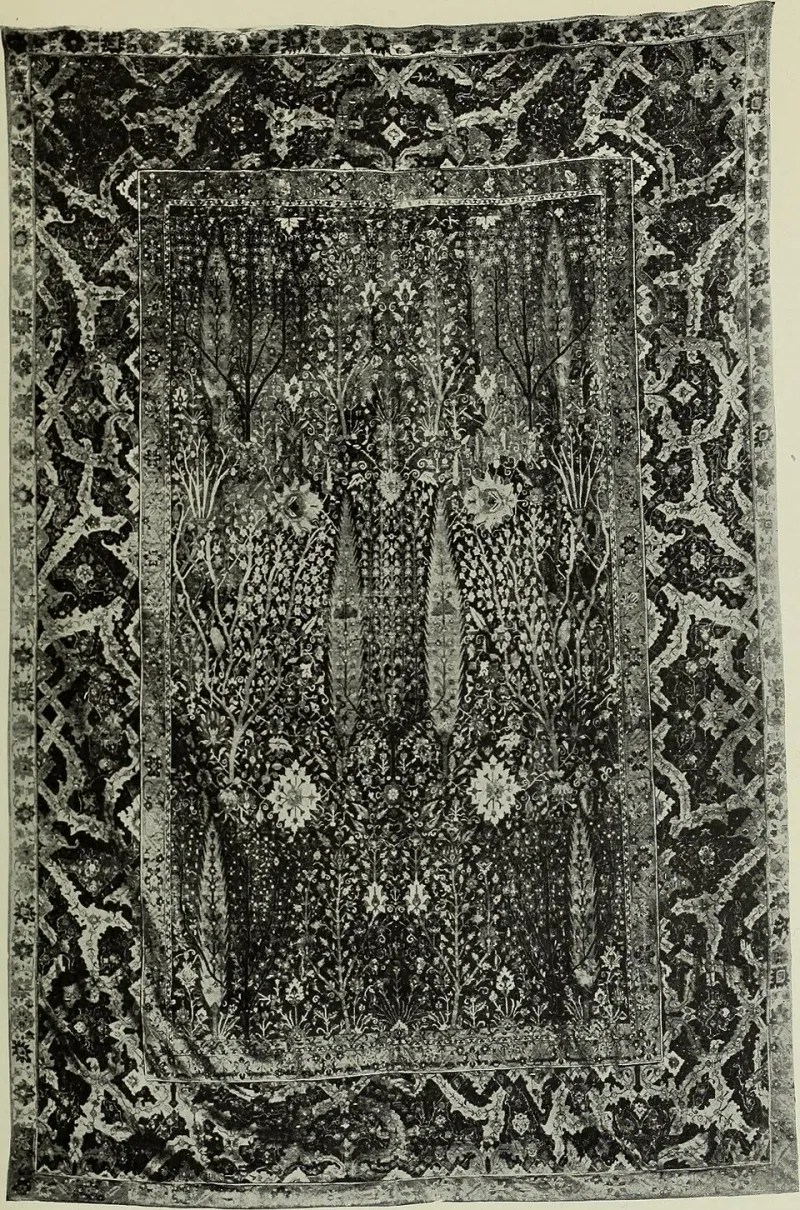
Photo: Hawley, W. A. (Walter Augustus), 1863-1920, No restrictions, via Wikimedia Commons
A consolidated statement is an impressive document. It totals equities, fixed income, private placements, and perhaps a slice of real estate, and it arrives on schedule with a footnote for every assumption. What it cannot do is describe the Pichwai hanging in the stairwell, the Pashmina folded in a muslin box, or the Deccan miniature in the third drawer of a study in Palm Beach.
Those objects are, collectively, a meaningful share of many American fortunes. They are also the portion of the estate that no one is quite managing.
The Gap in the Statement
Financial institutions report what they custody. Tangible assets sit outside that perimeter — acquired at auction or on a trip, gifted between generations, insured at a figure someone estimated a decade ago and never revisited. Valuation is stale, documentation is scattered, and custody is often a closet.
The gap is not merely administrative. When an estate is settled, an executor who can price a bond portfolio to the basis point may be unable to state, under oath, where a set of antique temple jewelry actually is.
Hyderabad's concierge desks have spent the past several years building a service around precisely that gap.
Five Functions, One Desk
Sourcing. Not shopping. A brief is written, candidates are identified through dealer and family networks rather than public listings, and the desk reports on what it found and what it rejected. The rejection record is often more useful than the acquisition.
Authentication. Every tangible asset needs an opinion that will survive scrutiny. Desks work with conservators, textile historians, and family archives, producing a written assessment with photographs and a stated basis. Where confidence is absent, the desk says so — a practice that has cost some of them sales and won all of them repeat clients.
Custody. This is the least glamorous function and the one American families underrate. Pashmina requires particular humidity and rotation to avoid creasing along the fold. Miniatures require stable light and protection from the adhesives used in cheap framing. Temple jewelry requires separation, documentation, and a security standard above a bank box. Hyderabad's climate-controlled facilities are now specified in some American estate plans by name.
Insurance. Desks prepare the schedules that brokers need, including condition reports and replacement-cost analysis. The practical effect is that a family stops discovering, at the moment of loss, that the policy valued a shawl at a fraction of what it would cost to replace.
Rotation. The asset class that lives in a vault is an asset class nobody enjoys. Desks manage exhibition calendars — a season on the wall, a season in storage, a loan to a museum, a return for conservation — so that the collection is both preserved and used.
The Custody Problem
Americans tend to assume that a safe deposit box is custody. It is storage, which is different. A box protects against theft and does nothing about light, humidity, insect pressure, or the slow chemistry of a folded textile.
Nor does a box solve the documentation problem. Several desks now recommend a simple discipline: photograph every significant object on acquisition, record its dimensions, note its condition, and store the record in two places. The instruction sounds elementary. It is also the reason some estates settle in months and others in years.
Succession and the Inventory Problem
Here the concierge model intersects directly with estate planning. Heirs inheriting a financial portfolio inherit a system — statements, advisors, a custodian with a phone number. Heirs inheriting a collection inherit objects and, frequently, silence.
Desks are increasingly retained to produce what amounts to a tangible-asset schedule: an inventory with values, provenance summaries, and custodial instructions, written for someone who has never seen the piece. Some families attach it to the estate documents. Others keep it separate and simply ensure the executor knows it exists.
The most thoughtful version includes intent. Why this Pichwai, why this shawl, what the family believed it was for. An inventory tells an heir what they own. A letter tells them why anyone cared.
Where the Model Stops
It would be dishonest to present this as a substitute for professional advice. Hyderabad's desks are not fiduciaries, and American families should not treat them as such. A reputable desk will work alongside counsel and the family office, not in place of either, and will say so unprompted.
Nor does the model eliminate risk. Cross-border custody invites jurisdictional questions, and insurance written in one country against a schedule prepared in another deserves careful reading.
What the model does offer is attention — sustained, documented, and specific — to the part of a fortune that has always been managed by memory and habit. For families whose balance sheet is only half visible on paper, that may be the most valuable line item of all.