Eleven Things Hyderabad's Concierge Desks Will Never Put on a Plane — and Why the Refusal Sells

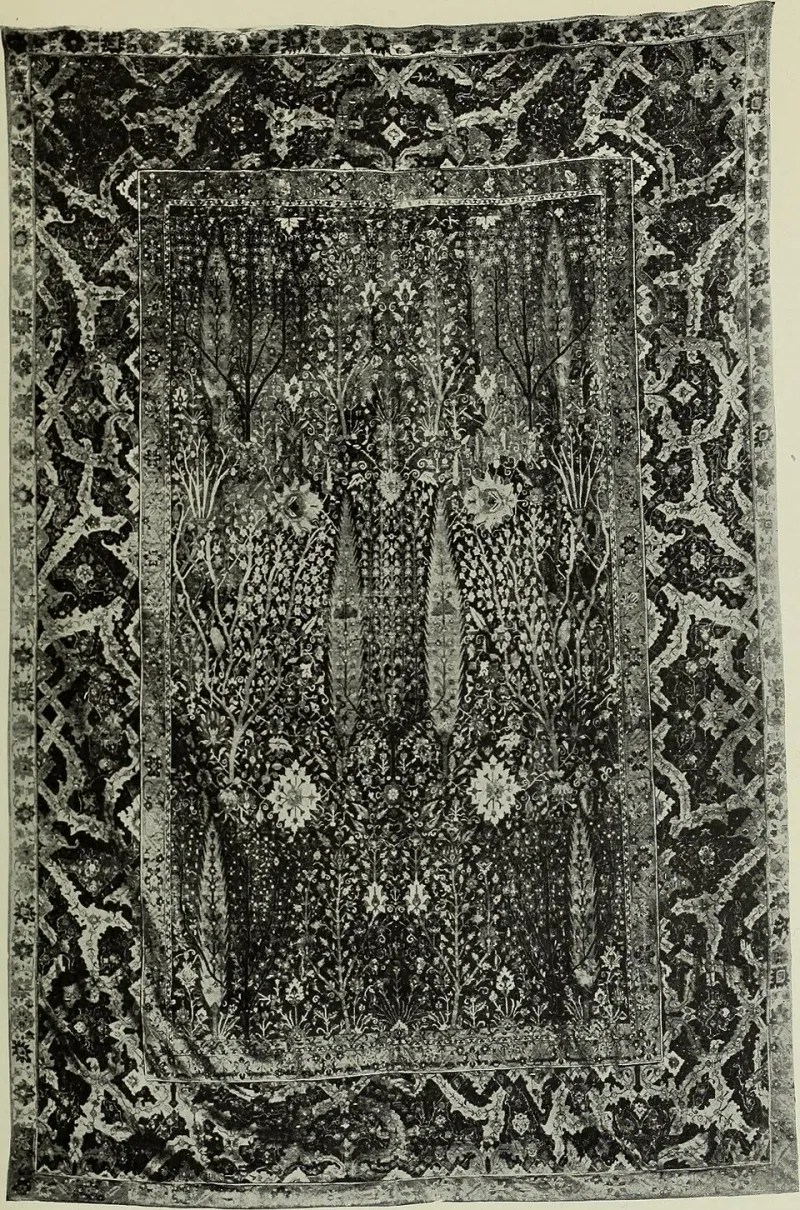
Photo: Familial atelier of Nainsukh of Guler, Public domain, via Wikimedia Commons
There is a document that circulates among the senior concierge desks of Hyderabad, revised each quarter and never shown to a client. It carries no formal title. The staff call it the negative list, and by their own account it is the most valuable page in the file.
It is not an inventory and not a price sheet. It is a record of the goods a desk will decline to source, crate, or consign to an address in the United States — regardless of budget, deadline, or the elegance of the request. American buyers, trained by a marketplace in which nearly everything has a price and a shipping option, tend to read such refusals as friction. The desks read them as the product.
What follows is an approximation of that list, drawn from conversations with principals and desk managers across the city. Eleven categories, grouped by the logic behind the refusal.
The Patrimony Refusals
1. Antiquities without export clearance. India's Antiquities and Art Treasures Act treats objects of a century or more as national patrimony, and moving one abroad requires documentation most private collections cannot produce. The desk declines not because the piece is unlovely but because it is, in the eyes of two governments, unsellable. The refusal spares the client a seizure, a forfeiture, and the particular silence that follows a customs inquiry.
2. Unregistered Deccan miniatures. A painting with no documented line of descent is a painting with a question attached, and questions travel badly. Desks that will happily negotiate a six-figure Pichwai will walk away from a superb eighteenth-century folio whose ownership chain begins in 2019. The distinction is not aesthetic. It is evidentiary.
3. Palm-leaf manuscripts. Brittle, humid, and frequently the only surviving copy of what they record. Several desks treat them as non-exportable on principle alone, independent of statute. The line used internally is blunt: a manuscript that cracks in a cargo hold is a document destroyed by a purchase order.
4. Old-gold temple jewelry. Two objections converge here — restrictions on the export of antique gold, and the fact that many of these pieces are still in ritual circulation and were never properly the seller's to sell. A desk that asks to see the temple's release before it asks to see the setting is a desk that knows its business.
The Biological Refusals
5. Living plants. Jasmine rooted for a courtyard, tulsi in a brass pot, a curry-leaf sapling from a family garden. United States plant-health rules are unforgiving, and the paperwork required to move living material legally rarely survives contact with a two-week timeline. The refusal protects the buyer from an inspection notice and the plant from a hold in a warehouse.
6. Seeds, soil, and untreated botanical material. The adjacent category, and the one clients argue about most. No, the earth from the family plot cannot travel with the urn. Yes, there are compliant alternatives. No, the desk will not improvise one.
7. Sandalwood and red sanders. Both are governed by export restrictions and international trade conventions that predate the current boom in Deccan craft collecting. Desks handle these materials in Hyderabad and nowhere else, and they are candid that the rule will not bend for a good relationship.
8. Ivory, in every form. Including inlay, including furniture, including the small carved panel that has been in a family for three generations. A near-total federal ban in the United States makes the object worthless on arrival and potentially criminal to hold. The refusal is the least negotiable on the list.
The Title Refusals
9. Ritual textiles that have been offered to a deity. A cloth that has received offerings is not merchandise, and the families and temples that hold such pieces frequently regard a sale as a category error. Desks will arrange viewing. They will not arrange a bill of lading.
10. Anything with a gap in the chain of custody. Even where the object is legal, a hole in the provenance record converts a trophy into a liability. Sophisticated American buyers now ask for the chain before they ask for the price, which means the desk's refusal is doing double duty: it protects the client and it protects the desk's name.
11. Objects the desk cannot authenticate to its own standard. This is the quietest and most consequential entry. Where a desk lacks confidence in a piece, it does not offer a hedged opinion — it declines the transaction. In a market where the auction houses will sell you a question mark with a glossy catalogue, an institution that simply says no is advertising a level of conviction that money cannot usually buy.
Why the Refusal Is the Service
Read the list again and a pattern emerges. None of these refusals is about scarcity. Each is about a boundary that exists before the client arrives — a boundary set by law, biology, ritual, or evidentiary rigor, and enforced whether or not anyone is watching.
That is the commodity. For an American collector who has spent two decades watching guarantees multiply and disclosures shrink, the willingness to lose a commission is the clearest available proof of expertise. A desk that will ship anything is a desk that has decided its judgement is for sale.
The practical consequence is a shift in how these relationships begin. Clients no longer open with what they want. They open by asking what the desk will not do. The negative list has become, in effect, a credential — the document that answers the only question that matters at this level of the market, which is not whether the object is beautiful, but whether the person holding it can be trusted to say no.
Hyderabad's desks have been saying it for a long time. It is only now that the answer is worth paying for.