The Polite No: Inside the Five-Minute Triage That Governs Hyderabad's Most Exclusive Concierge Desks
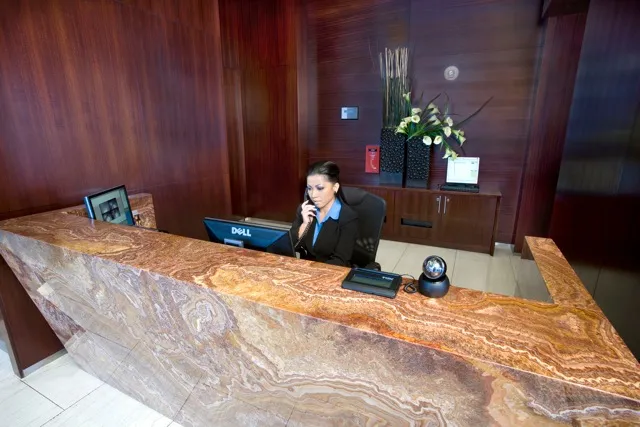
Photo: PanoramaTowers, CC BY-SA 3.0, via Wikimedia Commons
A Request Arrives at an Unreasonable Hour
At 2:14 a.m. Hyderabad time, a message lands on a private concierge desk. An American client, traveling between New York and London, wants a Deccan miniature from a private collection viewed before an auction in Mumbai. The client is specific about the work, vague about the timeline, and generous about the fee. The concierge does not answer immediately. For the next five minutes, the request is not judged by its price. It is judged by its shape.
This is the quiet machinery of elite concierge work in Hyderabad: a triage process so fast and so informal that clients rarely notice it. The desk is not deciding whether the request is desirable. It is deciding whether the request can be delivered without damaging the relationships that make delivery possible in the first place.
The First Filter Is Not Money
A common misreading among wealthy clients is that urgency plus budget equals priority. In Hyderabad's most established concierge offices, the first question is different: who is asking, and what does this request reveal about how they intend to be served?
A first-time client asking for a table at a fully committed restaurant is one thing. A first-time client asking a curator to open a private archive on a national holiday is another. The second request may be technically possible, but it asks the concierge to spend relationship capital that took decades to accumulate. The desk weighs the request against the client's history—not merely their spending, but their conduct. Do they accept no gracefully? Do they respect the pace of a negotiation? Do they understand that some doors in Hyderabad open slowly because they are old and heavy?
Money is a threshold, not a tiebreaker. Once a client can afford the request, affordability stops being the interesting question.
Urgency Has a Grammar
Genuine urgency tends to arrive with structure. There is a dated deadline, a named decision-maker, a consequence if the answer is no. Manufactured urgency arrives with adjectives. The five-minute review looks for the difference.
A useful request tells the concierge what happens if the answer is no. A serious collector who must inspect a painting before a Friday auction has a clear consequence. An executive who wants a private dinner moved because a colleague's flight changed has a clear consequence. A client who simply wants the best available option tonight has a preference, not an emergency. The distinction matters because every expedited favor displaces something else—a planned site visit, a craftsman's promised delivery, a family office's carefully sequenced introduction.
The desk also asks who else is affected. A request that inconveniences a single vendor is easier to consider than one that disrupts a heritage property, a private chef, and three separate drivers during a wedding season already booked to capacity.
The Ledger Behind the Answer
Every senior concierge keeps a mental ledger, though it is rarely called that. It records not transactions but patterns. One American family may have used the same Hyderabad desk for a decade: a quiet anniversary dinner, a last-minute medical referral, a complicated transfer of family papers. They ask rarely and precisely. When they call with something difficult, the desk moves.
Another client may spend more in a single quarter but treat every request as a test of leverage. The desk learns to answer with alternatives rather than commitments. The client who asks for everything receives less than the client who asks seldom and well. This is not a moral judgment. It is a practical one. Exclusivity cannot survive if it is distributed evenly to whoever pushes hardest.
Reputational fit matters as well. Hyderabad's private networks are small. A concierge who arranges an intrusive request may find that the next artisan, curator, or estate manager is less available. The client experiences a no. The desk experiences a closed door that may take years to reopen.
When the Answer Is a Polite No
The refusal is rarely a single sentence. It is usually a redirection: a different date, a comparable property, a less invasive way to see the work. The goal is not to make the client feel rejected. It is to make the boundary feel natural.
American clients sometimes misread this indirection as delay. In Hyderabad, a polite no may arrive as a question about timing, a request for more information, or an offer that is deliberately not quite what was asked for. The experienced client learns the grammar. The inexperienced client pushes harder and receives a firmer quiet.
That quiet is the point. A concierge who says yes to everything is not powerful. A concierge who can say no and still keep the client is.
The Five-Minute Discipline
As demand from the United States grows, Hyderabad's concierge desks face more requests than ever. The five-minute triage is how they keep the service from becoming a queue. It is not arbitrary, and it is not personal. It is a discipline of protecting the conditions that make rare access possible: trust, timing, and the willingness of others to keep answering the phone.
For American clients, the lesson is simple. In Hyderabad, access is not purchased once. It is renewed through restraint. The most valuable favor a concierge can grant may be the one they decline to promise—and the most valuable client is the one who understands why.