Commissioned in the City of Pearls: How Ultra-Wealthy Americans Are Accessing Hyderabad's Secret Artisan Networks
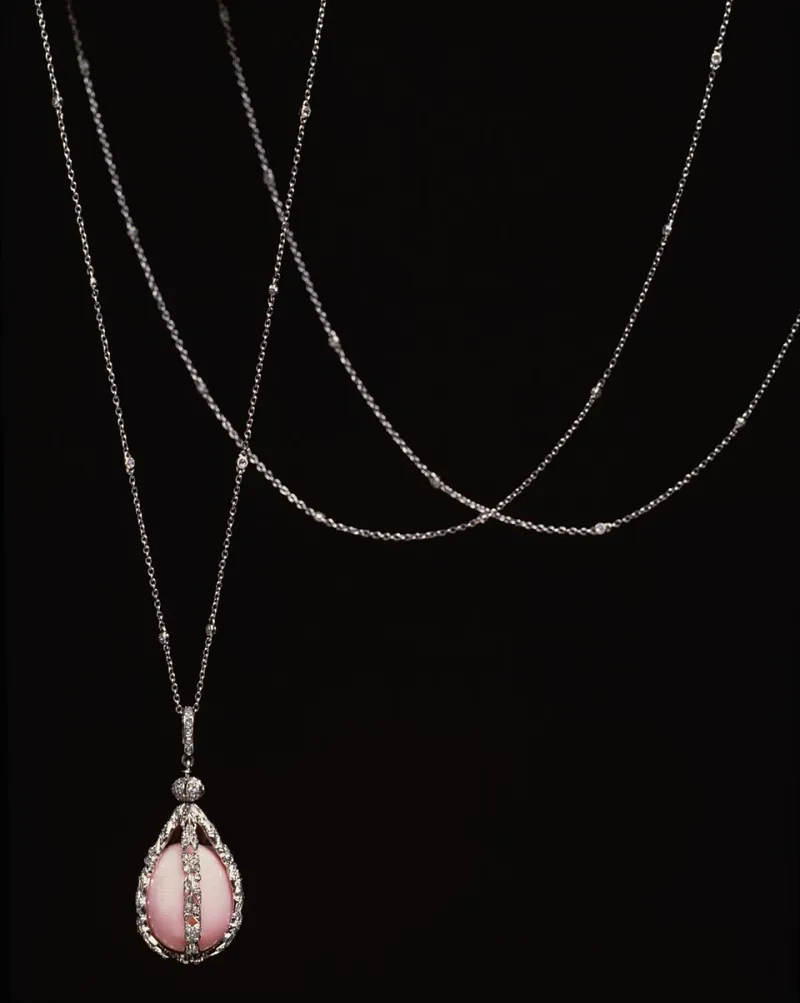
Photo: Tiffany & Co., Public domain, via Wikimedia Commons
There is a particular kind of luxury that resists photography. It does not perform well on a brand's Instagram grid, nor does it arrive in a signature-colored box with a satin ribbon. It lives, instead, in the weight of a strand of natural pearls that took three generations of a single family to source, grade, and string—a piece whose provenance cannot be replicated, whose story cannot be purchased off a shelf in Beverly Hills or on Fifth Avenue.
This is the luxury that Hyderabad has always understood. And increasingly, it is the luxury that America's most sophisticated collectors are traveling to find.
The Heritage Behind the Craft
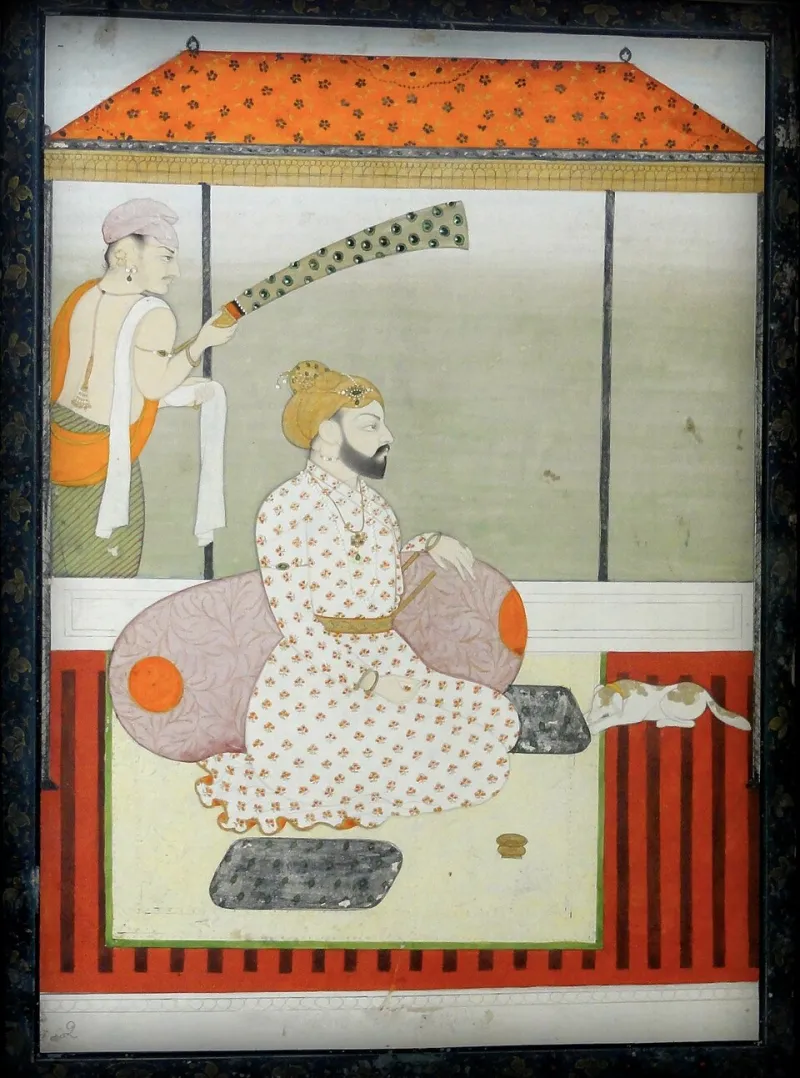
Hyderabad's identity as a center of exceptional craftsmanship is not a modern marketing invention. The city's relationship with pearls stretches back to the Nizams—the ruling sovereigns whose courts were among the wealthiest in the world during the 18th and 19th centuries. The Nizam of Hyderabad was, at one point, reportedly the richest individual on earth, and his appetite for extraordinary jewelry drove the development of artisan guilds whose techniques were refined over centuries, passed from master to apprentice with the kind of patience that industrial production has made nearly obsolete.
The pearl trade that defined the old city's economy drew merchants from the Persian Gulf, enabling Hyderabad to become a critical sorting and grading hub for natural pearls long before the Japanese cultured pearl industry restructured global supply. What remained after that disruption was something arguably more valuable: an unbroken tradition of human expertise in evaluating, matching, and setting stones and pearls with a precision that machines still cannot fully replicate.
Today, that expertise persists in the workshops tucked behind the historic lanes of Laad Bazaar and in private ateliers that receive no foot traffic, operate by appointment only, and serve clients whose names are never disclosed.
Why American Collectors Are Paying Attention
The shift in American collector behavior has been gradual but unmistakable. A generation ago, the aspiration was the recognizable logo—the Cartier box, the Tiffany blue bag. That signaling mechanism still holds currency in certain circles, but among the truly affluent, the conversation has moved. Provenance, uniqueness, and the narrative embedded in an object now carry more social weight than a brand name stamped on a clasp.
This is precisely where Hyderabad's artisan networks hold an extraordinary advantage. A commission executed through a master craftsman in Hyderabad is, by definition, singular. There is no production run. There is no warehouse inventory. There is a conversation between a client and a maker, mediated by a concierge who understands both worlds fluently, resulting in an object that exists nowhere else on earth.
For collectors accustomed to the American luxury market—where even "bespoke" services often involve selecting from a predetermined menu of options—the depth of customization available through Hyderabad's artisan networks can feel genuinely startling.
The Role of the Concierge in Bridging Two Worlds
Access, however, is not automatic. The most accomplished artisan workshops in Hyderabad do not advertise. Many operate on reputation alone, accepting commissions exclusively through trusted intermediaries who can vouch for a client's seriousness and communicate their vision with cultural and aesthetic fluency.
This is where a specialized luxury concierge service becomes not merely convenient but genuinely essential. Navigating the distinction between a workshop that produces quality tourist-market goods and one capable of executing a commission at the level of museum-quality jewelry requires relationships cultivated over years. It requires the ability to translate an American client's aesthetic language—their references, their lifestyle, the occasions for which a piece will be worn—into a brief that a Hyderabadi master craftsman can interpret with complete confidence.
The process typically begins well before any client boards a flight. Initial consultations establish the scope of the commission: the materials, the timeline, the intended use, and the budget parameters. Sketches and material samples may be exchanged digitally. Then, when the client arrives in Hyderabad, the concierge facilitates direct meetings with the artisan—sessions that are, by all accounts, transformative for collectors accustomed to the transactional nature of retail luxury.
Sitting across from a craftsman who can trace his family's involvement in pearl trading to the early 20th century, handling unset stones under natural light, discussing the specific tension in a setting—these are experiences that recalibrate one's understanding of what jewelry actually is.
Quality, Verification, and the Question of Trust
Skeptical American clients often raise legitimate questions about quality assurance when commissioning work outside the established luxury retail ecosystem. The concern is understandable. Without the institutional guarantee of a major house, how does one verify that materials are authentic, that craftsmanship meets the promised standard, and that the finished piece reflects the original commission?
A reputable concierge service addresses this through layered verification at every stage of the process. Gemological documentation, third-party appraisal options, and transparent sourcing chains are standard components of a well-structured commission arrangement. Clients are not asked to take quality on faith—they are provided with the documentation and expert access necessary to make informed judgments.
This rigor, paradoxically, is part of what makes the experience feel more luxurious, not less. The confidence that comes from understanding exactly what one owns—its materials, its maker, its place in a long tradition—is a form of satisfaction that a receipt from a flagship boutique cannot provide.
A New Definition of Collector Status
Among the American clients who have worked with Hyderabad's artisan networks, a consistent observation emerges: the piece itself becomes secondary to the story of its creation. The commission process—the travel, the meetings, the collaborative development of something that did not previously exist—becomes an experience that carries its own prestige.
In a cultural moment when experiences are increasingly valued over possessions, this dynamic is particularly resonant. The collector who can describe sitting in a centuries-old workshop in the old city of Hyderabad, selecting pearls by hand with a craftsman whose grandfather supplied the same families, holds a form of social currency that no amount of retail spending can manufacture.
Hyderabad VIP Service exists precisely to make that experience accessible—and to ensure that every element of it, from the first inquiry to the final delivery, reflects the standard of care that extraordinary clients deserve.