Inheritance You Can Wear: The American Heirs Apprenticing in Hyderabad's Pearl Bazaars
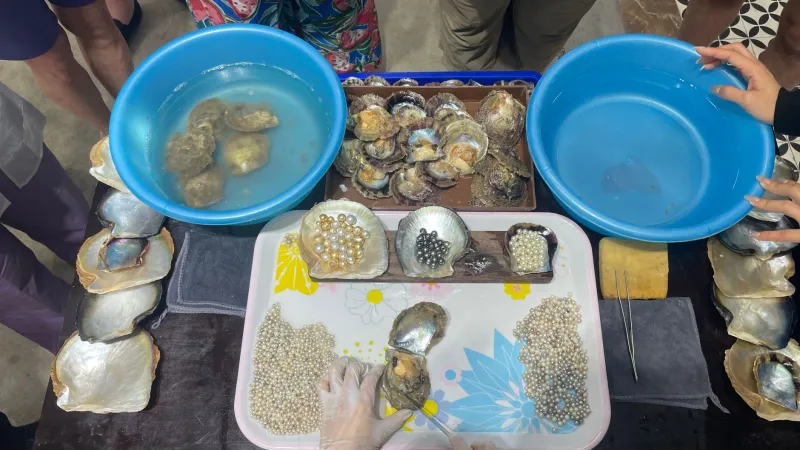
In the covered lanes of Laad Bazaar, beneath strings of unstrung Basra pearls and the low hum of negotiation, a new kind of student has begun appearing. They are American — often college-aged, occasionally mid-career heirs — and they arrive not as tourists but as apprentices, dispatched by parents who have concluded that the most valuable inheritance they can pass down is judgment itself.
The practice remains deliberately quiet. No brochures circulate, no websites advertise placements. Yet over the past three years, a small network of Hyderabad's veteran pearl dealers has begun accepting a handful of American students each season, each introduction arranged through trusted intermediaries and each apprenticeship shaped around a single family's hopes for its next generation.
A Curriculum Written in Four Centuries of Trade
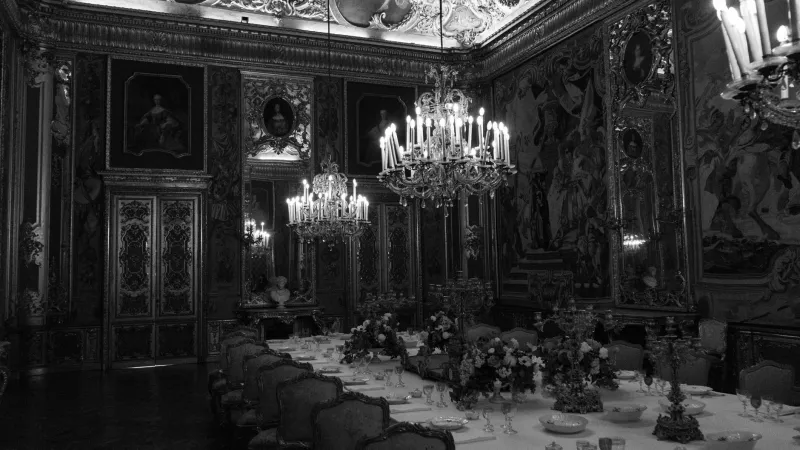
Hyderabad's relationship with pearls is not a marketing narrative; it is a four-hundred-year inheritance. Under the Qutb Shahi sultans and later the Nizams, the city became the subcontinent's clearinghouse for pearls harvested from the Persian Gulf and, eventually, the world's great pearl fisheries. Dealing was a family affair, with knowledge passing from father to daughter, uncle to nephew, across unbroken generations.
That lineage is precisely what makes the city irreplaceable as a classroom. The masters now hosting American apprentices represent what many dealers privately acknowledge is the final generation to have learned the trade in its pre-digital form — an era when a dealer's entire reputation rested on the ability to assess luster, nacre, and provenance by eye, by lamplight, in seconds.
Apprentices describe mornings spent sorting parcels by candle-white daylight, afternoons in the back rooms where families have traded for a century, and evenings deconstructing the day's negotiations with a mentor who may have begun dealing before the apprentice's parents were born.
Why Wealthy Americans Are Looking Beyond Wall Street
The families commissioning these apprenticeships are not, for the most part, trying to raise jewelers. They are trying to raise stewards.
The reasoning, as several participating advisors describe it, follows a familiar anxiety: the second and third generations of substantial American fortunes too often inherit assets without inheriting the discernment that built them. A trust can transfer capital; it cannot transfer taste, skepticism, or the ability to walk away from a bad deal.
Pearls, it turns out, are an unusually effective teaching instrument. Unlike equities, their value resists a ticker. Pricing depends on subtle, debatable qualities — orient, surface, symmetry — that force a young person to develop and defend an independent opinion. Unlike real estate, a pearl fits in a pocket, making the consequences of a misjudgment immediate and personal.
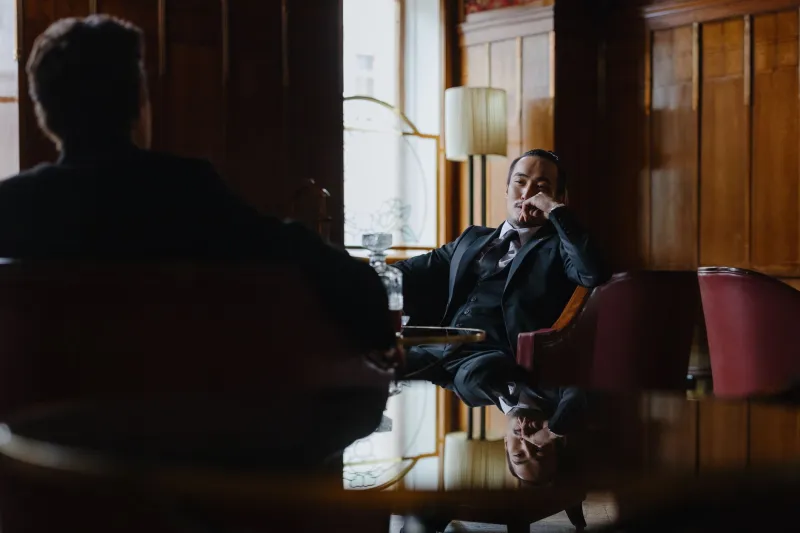
One family office principal, whose daughter completed a placement last winter, framed it plainly: "I could have sent her to a summer analyst program. Instead she spent six weeks learning how a man who has handled pearls for fifty years decides whom to trust. That is the course I actually wanted her to take."
The Discreet Machinery of Access
None of this happens through open enrollment. Placements are brokered through a small circle of Hyderabad-based concierge firms and family offices with standing relationships among the old dealer families. Screening runs in both directions: masters decline students they consider unserious, and American families vet mentors with the care they would apply to a trustee.
The programs themselves are structured loosely but run deep. A typical placement spans four to eight weeks, with the apprentice embedded in a single dealing house rather than rotated through a curriculum. Compensation is rarely discussed in monetary terms; instead, families typically underwrite a substantial purchase — often the apprentice's first significant pearl, selected under supervision — a transaction that serves simultaneously as tuition, rite of passage, and the beginning of a collection the heir will manage for decades.
Confidentiality, the defining feature of Hyderabad's private service economy, extends to these arrangements. Dealers will not confirm names; families will not discuss terms. What leaks out does so through the alumni network itself — the heirs who return to New York, Chicago, or Dallas with an unexpected fluency in Gulf pearl grading and a dealer in Charminar's shadow who now answers their calls first.
Character Education, Measured in Carats
What surprises most participants is how little of the apprenticeship is about gemology. The recurring themes in debriefs with American families are temperamental: learning to sit through silence in a negotiation, to offer a price without flinching, to accept that a deal lost today may be a relationship gained for twenty years.
These are, not coincidentally, the same virtues the bazaar's founding merchant communities — including Hyderabad's storied trading dynasties — encoded into their commercial culture over centuries. The apprenticeship does not so much teach a skill as induct a young American into an older, slower theory of value: that reputation compounds like capital, and that patience is not the absence of ambition but its most durable form.
For the families writing the checks, that is the point. Markets can be studied anywhere. What Hyderabad offers, uniquely, is a living counterweight to the velocity of American wealth — a place where the most sophisticated participants in a global trade still measure a person across decades rather than quarters.
An Education That Outlasts the Asset
Whether this quiet pipeline grows or remains a boutique practice is uncertain. The number of masters willing and able to teach is finite, and both sides seem to prefer it that way. But for the families involved, the calculation is already settled. A pearl, properly chosen, holds its luster for generations. So, the thinking goes, does a well-made dealer's eye — or the heir lucky enough to inherit one.
In the City of Pearls, the most exclusive commodity has never been the merchandise. It is the mentorship. And for a growing handful of American heirs, the family inheritance now begins in a shop older than the United States itself.