The Kitchen That Never Advertises: Inside Hyderabad's Phantom Chef Network Now Commanding American Dinner Tables
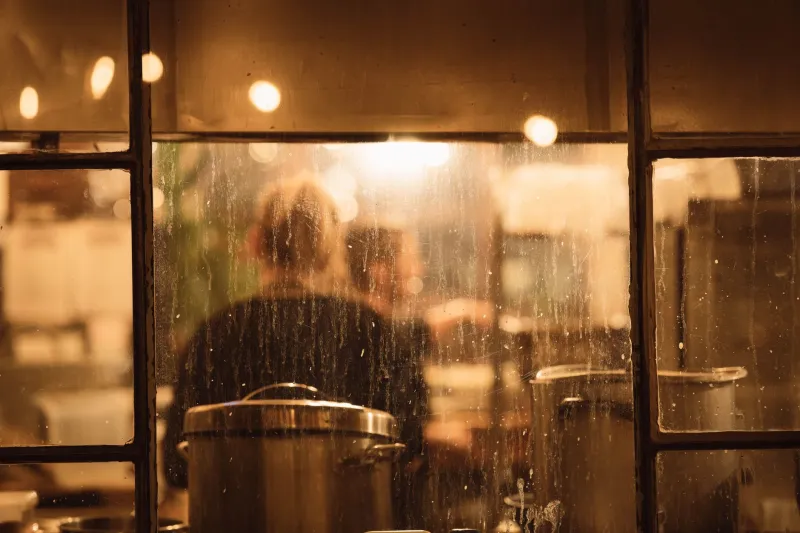
In the hierarchy of American dinner-party prestige, the calculus has shifted. A decade ago, the ultimate statement was flying in a celebrity chef — a Thomas Keller protégé, a Massimo Bottura disciple. Today, at the most rarefied tables in Manhattan, Palm Beach, and Atherton, the flex is quieter and considerably more exotic: a chef from Hyderabad whose name appears nowhere, whose kitchen has no address, and whose recipes have never been served to a paying customer.
Concierge networks in the City of Pearls have spent years cultivating what insiders now call the phantom chef network — a roster of culinary artisans drawn from the Deccani royal tradition, each of whom has cooked exclusively for private households and, until recently, never beyond Indian shores.
A Cuisine Built for Courts, Not Dining Rooms
Hyderabad's culinary lineage is unlike anything in the global fine-dining canon. Under the Nizams, the royal kitchens operated as laboratories of secrecy: recipes were guarded within families, techniques were transmitted orally across generations, and signature dishes — the slow-sculpted biryanis, the marrow-deep haleem, the apricot labyrinths of Deccani desserts — were never commercialized. There was no restaurant economy to dilute them.
That history produced something the modern American food world has inadvertently made scarce: cuisine with genuine provenance. When a host in the Hamptons seats twelve guests for a dinner prepared by a chef trained in a lineage that predates American fine dining by two centuries, the experience carries a weight no tasting menu can manufacture.
The Vetting: Why Access Takes Months
Concierge firms facilitating these engagements describe a vetting process more resembling a diplomatic posting than a catering arrangement.
Prospective hosts are not simply matched with available chefs. The process typically includes:
- A private consultation, often conducted over several calls, to understand the host's intentions, guest profile, and discretion requirements
- Culinary alignment sessions, where the chef designs a menu rooted in authentic Deccani technique rather than performing to Western expectations
- Logistical clearance, covering visa timelines, ingredient sourcing (certain spices and ghee varieties are imported under the chef's supervision), and kitchen reconnaissance of the American residence
- Mutual confidentiality agreements, binding both chef and household
The waiting period, in most cases, runs eight to fourteen weeks. Demand has grown faster than the network's willingness to expand it.
The Deliberate Scarcity
What distinguishes Hyderabad's private kitchen ecosystem is that its smallness is intentional. The chefs who accept international engagements — perhaps two dozen individuals at any given time — cap their commitments deliberately. Most will accept no more than a handful of American placements per year, spending the remainder of their calendar with long-standing private clients in India and the Gulf.
This is not a scaling problem; it is a philosophy. The Nizam-era kitchens that trained these chefs' traditions were never designed for volume. Exposure, in this world, is dilution. Every dinner served in a Bel Air penthouse is treated as a singular commission, not a franchise opportunity.
For American hosts, that scarcity is precisely the appeal. The chef who cooked for your table last month will not cook for your neighbor's table next month — not at any price the neighbor is willing to name.
What the Evening Actually Looks Like
A typical engagement spans three days. The chef arrives with one assistant and a sealed case of ingredients that could not be sourced domestically — saffron from specific Deccan suppliers, hand-pounded spice blends prepared weeks in advance, ghee clarified to a specification the chef will not disclose.
The dinner itself unfolds at a pace foreign to American service culture. Courses arrive without announcement. The chef explains nothing unless asked, and then only sparingly. Guests accustomed to the narrated theatrics of American chef's-table experiences frequently describe the silence as the most memorable element — a meal confident enough to require no commentary.
The menu might trace five centuries in seven courses: a dum-cooked biryani sealed in dough and broken at the table, kebabs refined in princely kitchens, a dessert built on apricots that grow only in a single Deccan valley.
The New Currency of the American Table
The shift reflects a broader exhaustion with credential-based luxury. When every city offers access to the same celebrated kitchens, the same reservation apps, the same televised chefs, the truly wealthy have moved toward the unverifiable — experiences that cannot be photographed, reviewed, or replicated.
An authentic Hyderabadi chef, arranged through a confidential concierge channel, sits at the apex of that movement. There is no Yelp page. No cookbook. No reservation to fight for. There is only the dinner, the guests, and a culinary tradition that has spent five centuries learning exactly how much to reveal.
In a culture where every luxury eventually becomes an advertisement, that may be the last genuine indulgence left.